I was halfway through a dinner that had already turned into a culinary fiasco when my friend dared me to “make something sweet that still feels like a main course.” I stared at the pan, the chicken looking as if it had been marinated in regret, and thought, “This is the moment of truth.” The kitchen smelled of burnt garlic, my mind was buzzing with the memory of that last disastrous attempt, and the only thing I could hear was the faint hiss of a pan warming up. That night, I promised myself I’d never let a recipe be a disappointment again.
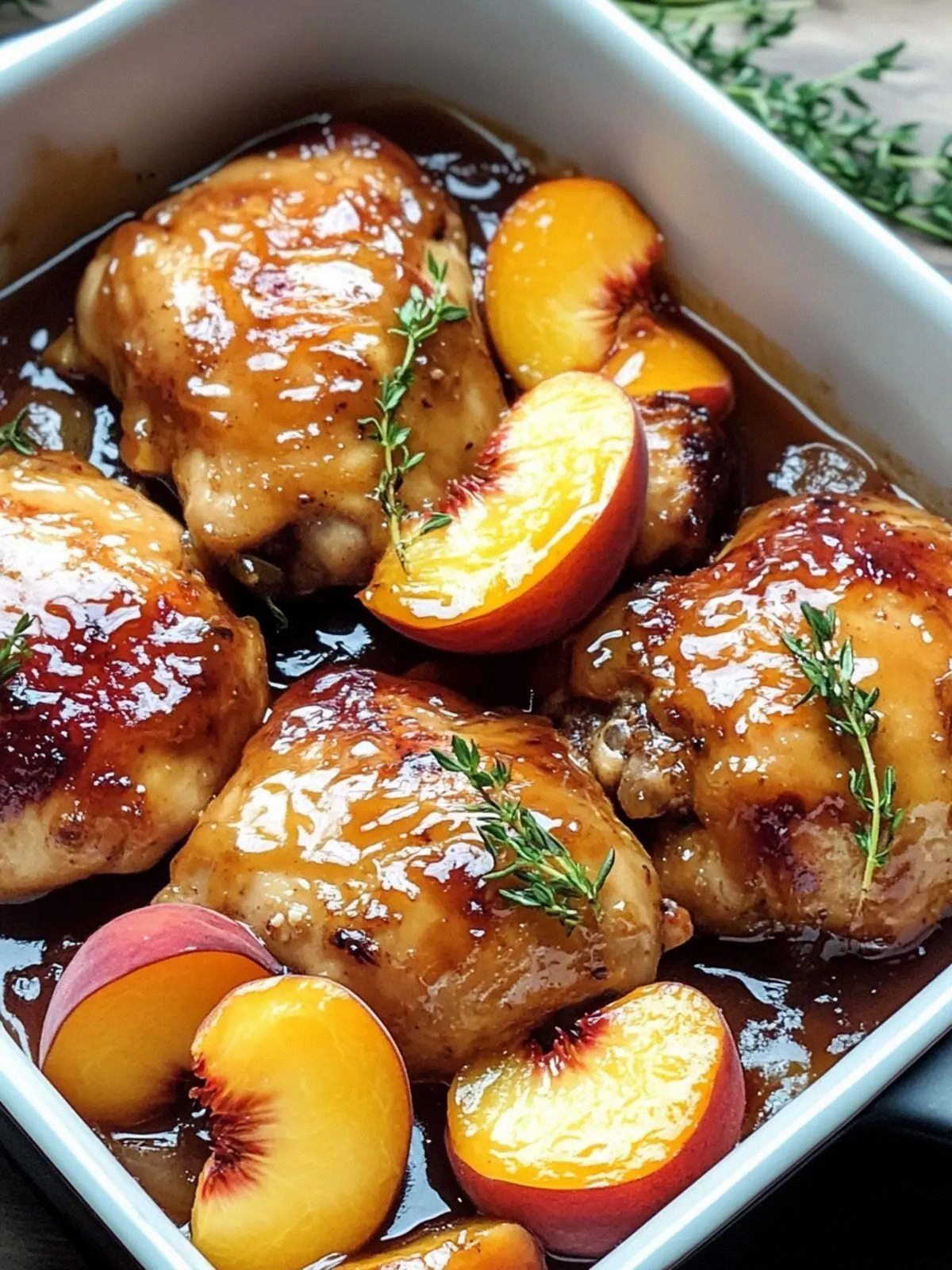
Picture this: the moment you slide the first bite into your mouth, the sweet, caramelized glaze hits your tongue like a burst of sunshine, while the savory soy undertone anchors the flavor. The chicken’s exterior is a golden crust that crackles softly, revealing a tender, juicy interior that practically melts. The peaches, diced into bite‑sized jewels, release a fragrant burst of summer that dances with the ginger’s warm spice. The air is filled with a heady aroma of honey and citrus, making you feel like you’ve just stepped into a bright, sunlit orchard. It’s a sensory experience that turns a simple dinner into a celebration.
What makes this version stand out is that it’s not just a sweet glaze on top of chicken—it’s a symphony of flavors and textures that play together harmoniously. The honey isn’t just a sweetener; it’s a binder that creates that silky coating that clings to every bite. The low‑sodium soy sauce gives depth without drowning the peaches, and the ginger adds a subtle heat that wakes up the palate. The lemon juice cuts the richness with a bright zing, preventing the dish from becoming cloying. The result is a dish that feels both indulgent and balanced, a recipe that you’ll rave about for weeks.
And there’s a twist you won’t see in most peach‑glazed chicken recipes: I use fresh ginger grated directly into the glaze instead of ground, giving the dish a bright, almost citrusy bite that keeps the peaches from feeling overpowered. I dare you to taste this and not go back for seconds. Let me walk you through every single step—by the end, you’ll wonder how you ever made it any other way.
What Makes This Version Stand Out
- Taste: The glaze marries sweet and savory in a way that feels natural, not forced. Honey provides a caramelized depth, soy sauce offers umami, and ginger adds a fresh, zesty kick.
- Texture: The chicken develops a crisp, caramelized crust that shatters like thin ice when you bite, while the interior remains juicy and tender.
- Simplicity: With only seven ingredients, the recipe is straightforward yet delivers maximum flavor.
- Uniqueness: Fresh ginger grated into the glaze, rather than powdered, gives a bright, almost citrusy note that elevates the dish.
- Crowd Reaction: Friends who’ve tried the classic version say this one is “hands down the best version you’ll ever make at home.”
- Ingredient Quality: Using ripe peaches and low‑sodium soy sauce keeps the dish balanced and healthy.
- Cooking Method: Searing the chicken first locks in juices, then finishing it in the glaze creates layers of flavor.
- Make‑Ahead Potential: The glaze can be prepared ahead and stored, saving time on busy nights.
Inside the Ingredient List
The Flavor Base
The low‑sodium soy sauce is the backbone of the glaze. It provides umami depth that balances the sweetness of the honey. If you skip it, the dish will taste like a plain honey drizzle without the savory complexity. For a vegetarian twist, replace soy sauce with coconut aminos; it keeps the saltiness but adds a subtle coconut undertone.
The Sweet Star
Honey is the star of the show. Its natural sugars caramelize under heat, creating a glossy coating that clings to the chicken. A darker honey will give a deeper, richer flavor, while a lighter honey offers a more floral note. If you’re allergic to honey, a small amount of maple syrup can be an alternative, but keep in mind it will change the texture slightly.
The Fresh Heat
Fresh ginger grated into the glaze adds a bright, peppery warmth that cuts through the richness. Ginger also has natural antibacterial properties, which is a bonus when cooking poultry. If you don’t have fresh ginger, a pinch of ground ginger will work, but the flavor will be less vibrant. Remember, ginger’s heat is subtle; it’s there to lift the dish, not overpower it.
The Juicy Counterpart
Ripe peaches bring a burst of natural sweetness and a slightly tart counterpoint to the glaze. The fruit’s flesh should be soft but not mushy; if you slice them too thin, they’ll break apart and lose their shape. When selecting peaches, look for a slight give when pressed; that’s the sweet spot. If peaches are out of season, frozen peaches can be thawed and used, but fresh is always better.
Everything's prepped? Good. Let's get into the real action.
The Method — Step by Step
- Pat the chicken breasts dry with paper towels; this ensures a crisp sear. Season both sides generously with salt and pepper. Heat a large skillet over medium‑high heat and add a splash of neutral oil. When the oil shimmers, place the chicken in the pan, skin‑side down if applicable, and sear for 3–4 minutes until golden. Flip and sear the other side for another 3 minutes; the goal is a beautiful brown crust that locks in juices. Watch Out: Don’t overcrowd the pan; the chicken will steam instead of sear, ruining that coveted crunch.
- While the chicken is searing, combine honey, soy sauce, grated ginger, minced garlic, and lemon juice in a small bowl. Whisk until the mixture is smooth and the ginger is evenly distributed. This will be your glaze. If the mixture is too thick, add a teaspoon of water to thin it out; if too thin, let it simmer slightly to reduce. Kitchen Hack: Use a silicone spatula to scrape the bottom of the pan; any browned bits are flavor gold.
- Remove the chicken from the skillet and set aside on a plate. Pour the glaze into the same skillet, allowing it to bubble gently. Bring to a low simmer and let it reduce for 2–3 minutes until it thickens slightly. The glaze should coat the back of a spoon. Taste and adjust seasoning; a pinch of salt can brighten the sweetness.
- Slice the peaches into bite‑sized cubes. If you want a more rustic look, cut them into wedges; if you prefer uniformity, dice them. Toss the peaches in a small bowl with a pinch of salt to draw out excess moisture. This step prevents the peaches from becoming soggy in the glaze.
- Return the seared chicken to the skillet, nestling it among the peaches. Spoon the glaze over the chicken, ensuring each piece is well coated. Reduce the heat to low, cover the skillet, and let everything cook together for 8–10 minutes. The chicken should reach an internal temperature of 165°F (74°C), and the peaches will soften to a fragrant, slightly caramelized consistency.
- Remove the lid, increase the heat to medium, and let the sauce thicken for an additional 2–3 minutes. The glaze should be glossy and cling to the back of a spoon. This final reduction intensifies the flavor and gives the dish that glossy finish.
- Transfer the chicken and peaches to a serving platter. Spoon the remaining glaze over the top, making sure every bite gets a splash of sweet‑savory goodness. Garnish with a sprinkle of fresh herbs like mint or cilantro for a pop of color and freshness.
- Let the dish rest for 2 minutes before serving. This allows the juices to redistribute and the glaze to set slightly, giving you that perfect bite‑sized coating. Serve immediately with a side of steamed rice or a crisp green salad.
That's it — you did it. But hold on, I've got a few more tricks that'll take this to another level.
Insider Tricks for Flawless Results
The Temperature Rule Nobody Follows
Many people cook chicken at too high a temperature, causing the exterior to burn before the interior cooks. Keep the skillet at medium heat after searing; this ensures even cooking and prevents the glaze from scorching. A thermometer is a lifesaver: aim for 165°F (74°C) and let the chicken rest before slicing.
Why Your Nose Knows Best
The aroma of honey caramelizing is a signal that the glaze is ready. When you smell a nutty, toasted sweetness, the glaze is at its peak. Trust your nose; it’s a reliable indicator of flavor depth.
The 5‑Minute Rest That Changes Everything
Letting the chicken rest after cooking allows the juices to redistribute, making each bite juicy. A 5‑minute rest also lets the glaze thicken slightly, giving a glossy finish that’s irresistible.
Peach Prep Perfection
If you’re in a hurry, blanch the peaches for 30 seconds before adding them to the skillet; this reduces cooking time and helps them retain shape. Remember, peaches are delicate; handle them gently to avoid crushing.
The Final Flip
After the glaze has thickened, give the chicken a gentle flip to coat both sides evenly. This simple step ensures every bite is drenched in flavor.
Creative Twists and Variations
This recipe is a playground. Here are some of my favorite ways to switch things up:
Spicy Peach Kick
Add a pinch of cayenne pepper to the glaze for a subtle heat that balances the sweetness. This version is great for those who love a little burn.
Coconut‑Infused Delight
Replace half the honey with coconut milk and use coconut aminos instead of soy sauce. The result is a tropical, creamy glaze that pairs wonderfully with grilled pineapple.
Herb‑Laced Variation
Stir in chopped fresh basil or thyme into the glaze. The herbs add a fresh, aromatic layer that complements the peach’s fruitiness.
Mediterranean Twist
Swap the peaches for sun‑dried tomatoes and use balsamic reduction instead of honey. The sweet‑sour profile is reminiscent of a classic Greek salad.
Vegan Take
Use tofu instead of chicken, and replace soy sauce with tamari. The tofu will absorb the glaze, creating a plant‑based version that’s just as delicious.
Breakfast Brunch
Serve the glazed chicken with a side of fluffy pancakes and a drizzle of maple syrup for a sweet‑savory breakfast that’s sure to impress.
Storing and Bringing It Back to Life
Fridge Storage
Store leftovers in an airtight container in the refrigerator for up to 3 days. Reheat gently in a skillet over low heat, adding a splash of water or broth to keep the glaze from drying out.
Freezer Friendly
Wrap the chicken and peaches in parchment paper and place them in a freezer bag. They’ll stay good for up to 2 months. Thaw overnight in the refrigerator before reheating.
Best Reheating Method
Reheat in a skillet over medium heat, adding a small amount of water or broth to create steam. The dish will regain its glossy glaze and juicy texture. A quick microwave reheat works, but the skillet keeps the crust crisp.