Introduction
Picture this: I was standing in my kitchen, staring at a stack of overcooked chicken breasts that had turned from golden to an unappetizing gray, when a friend texted, “Need a dinner idea.” I snapped a quick photo of the disaster and posted it, half hoping for a laugh, half hoping for a rescue plan. The comments flooded in, and one suggestion caught my eye—“Try adding pesto and cream.” The idea was simple, yet the promise of a silky sauce that could revive the chicken’s spirit sounded like a culinary lifeline.
I whisked together basil, garlic, olive oil, and a splash of lemon juice, then tossed the chicken in the fragrant mixture, letting the flavors mingle as the pan sizzled. The aroma that filled the kitchen—herbal, bright, with a hint of citrus—was enough to make my taste buds tingle. When the sauce thickened into a glossy, green velvet, I knew I’d stumbled on a game‑changing dish. The moment the first bite hit my tongue, the chicken’s dryness was replaced by tender, juicy meat coated in a rich, creamy pesto that sang with fresh basil and Parmesan.
What makes this version stand out is that it isn’t just another “pesto chicken” recipe; it’s a symphony of textures and flavors that dance together. The sauce is thick enough to cling to the chicken and pasta, yet light enough that it doesn’t overwhelm the palate. The addition of sun‑dried tomatoes brings a sweet, umami kick that balances the herbaceousness of the pesto. And the secret? A splash of heavy cream that turns the pesto from a simple condiment into a luxurious, velvety sauce that coats everything like a silky blanket.
I dare you to taste this and not go back for seconds. Most recipes get this completely wrong by either over‑sautéing the chicken or using too much cream, resulting in a greasy, bland dish. This version is hands down the best you’ll ever make at home because it hits every sweet spot—flavor, texture, and ease. Picture yourself pulling this out of the oven, the whole kitchen smelling incredible, and your guests begging for the recipe. Let me walk you through every single step—by the end, you’ll wonder how you ever made it any other way.
What Makes This Version Stand Out
- Taste: The sauce is a harmonious blend of basil, garlic, and Parmesan, balanced with a subtle citrus lift that brightens the dish without overpowering the chicken. The sun‑dried tomatoes add a sweet, smoky undertone that complements the herbaceous pesto.
- Texture: The cream transforms the pesto into a silky, velvety coating that clings to the chicken and pasta, creating a mouth‑watering mouthfeel that feels both indulgent and satisfying.
- Simplicity: With fewer than a dozen ingredients, this recipe can be assembled in under 15 minutes of prep time, making it an ideal go‑to for busy weeknights.
- Uniqueness: The combination of creamy pesto and sun‑dried tomatoes is rarely seen in standard pesto chicken recipes, giving this dish a distinctive flavor profile.
- Crowd Reaction: Guests rave about the depth of flavor and the comforting, restaurant‑style texture that feels like a treat but is surprisingly simple to make at home.
- Ingredient Quality: Fresh basil, high‑quality Parmesan, and a good olive oil elevate the dish, turning ordinary pantry staples into gourmet components.
- Cooking Method: Searing the chicken first locks in juices, while the final simmer with cream and pesto creates a cohesive sauce that doesn’t separate or scorch.
- Make‑Ahead Potential: The dish can be prepared ahead of time and reheated without losing its silky sauce, making it perfect for meal prep or entertaining.
Alright, let's break down exactly what goes into this masterpiece...
Inside the Ingredient List
The Flavor Base
Fresh basil is the star that gives the sauce its vibrant green hue and unmistakable aroma. Use about 2 cups of packed leaves to ensure the pesto has a robust flavor that can stand up to the cream. If you’re out of basil, spinach or arugula can offer a green punch, though the taste will shift slightly toward peppery or earthy.
Garlic is the backbone of any pesto, providing a savory depth that balances the sweetness of the sun‑dried tomatoes. Mince three cloves finely so that the garlic integrates smoothly into the sauce, preventing any crunchy bites. A pinch of salt enhances all the flavors and brings the dish together.
The Texture Crew
Heavy cream is the secret sauce that turns a simple pesto into a luscious, velvety coating. Use one cup of 35% fat cream for that silky mouthfeel without making the dish too heavy. If you prefer a lighter version, substitute half‑and‑half or a dairy‑free cream alternative, but remember the sauce will be slightly thinner.
Parmesan cheese adds a nutty, salty richness that anchors the pesto’s bright flavors. Grate ½ cup of Parmesan for the sauce and reserve a small pinch for topping the finished dish. The cheese also helps thicken the sauce slightly as it melts.
The Unexpected Star
Sun‑dried tomatoes are the unsung hero that brings a sweet, umami punch to the sauce. Chop one cup of sun‑dried tomatoes finely so they distribute evenly across the chicken and pasta. If you’re using oil‑packed tomatoes, squeeze out excess oil before adding them to avoid a greasy finish.
Olive oil is essential for searing the chicken and for creating a smooth pesto base. Use two tablespoons of extra‑virgin olive oil for the pan and an additional tablespoon for the pesto. A high‑quality oil with a peppery finish will add a subtle complexity to the dish.
The Final Flourish
Pasta—fettuccine or linguine—provides the canvas for the sauce. Cook 12 ounces of pasta according to the package directions, reserving a cup of pasta water to adjust the sauce’s thickness if needed. Tossing the pasta in the sauce right before serving ensures every strand is coated with the silky pesto.
Fresh basil leaves and lemon zest serve as final garnishes that add brightness and a pop of color. Tear a handful of basil leaves and sprinkle them over the finished dish for a fresh aroma. Grate a teaspoon of lemon zest into the sauce to cut through the richness and lift the overall flavor profile.
Everything's prepped? Good. Let's get into the real action...
The Method — Step by Step
- Heat a large skillet over medium‑high heat and add one tablespoon of olive oil. Let the oil shimmer, but not smoke, before adding the chicken. Season both sides of the four boneless breasts with salt and pepper, then sear until the underside turns a deep golden brown, about 3‑4 minutes per side. Flip and let the other side finish cooking; the chicken should reach an internal temperature of 165°F. Remove the chicken from the pan and set it aside to rest.
- In the same skillet, reduce the heat to medium and add the minced garlic and red pepper flakes. Sauté until the garlic turns fragrant and just begins to brown, about 30 seconds. Be careful not to let it burn; a burnt garlic bite will ruin the delicate pesto flavor. The pan should emit a warm, buttery aroma that signals readiness for the next step.
- Stir in the sun‑dried tomatoes, letting them soften and release their sweet oils for about 2 minutes. Then pour in the heavy cream, whisking constantly to avoid lumps. As the cream begins to thicken, add the grated Parmesan, stirring until it melts into a smooth, glossy sauce. This is the moment of truth—if the sauce looks too thick, add a splash of pasta water to reach your desired consistency.
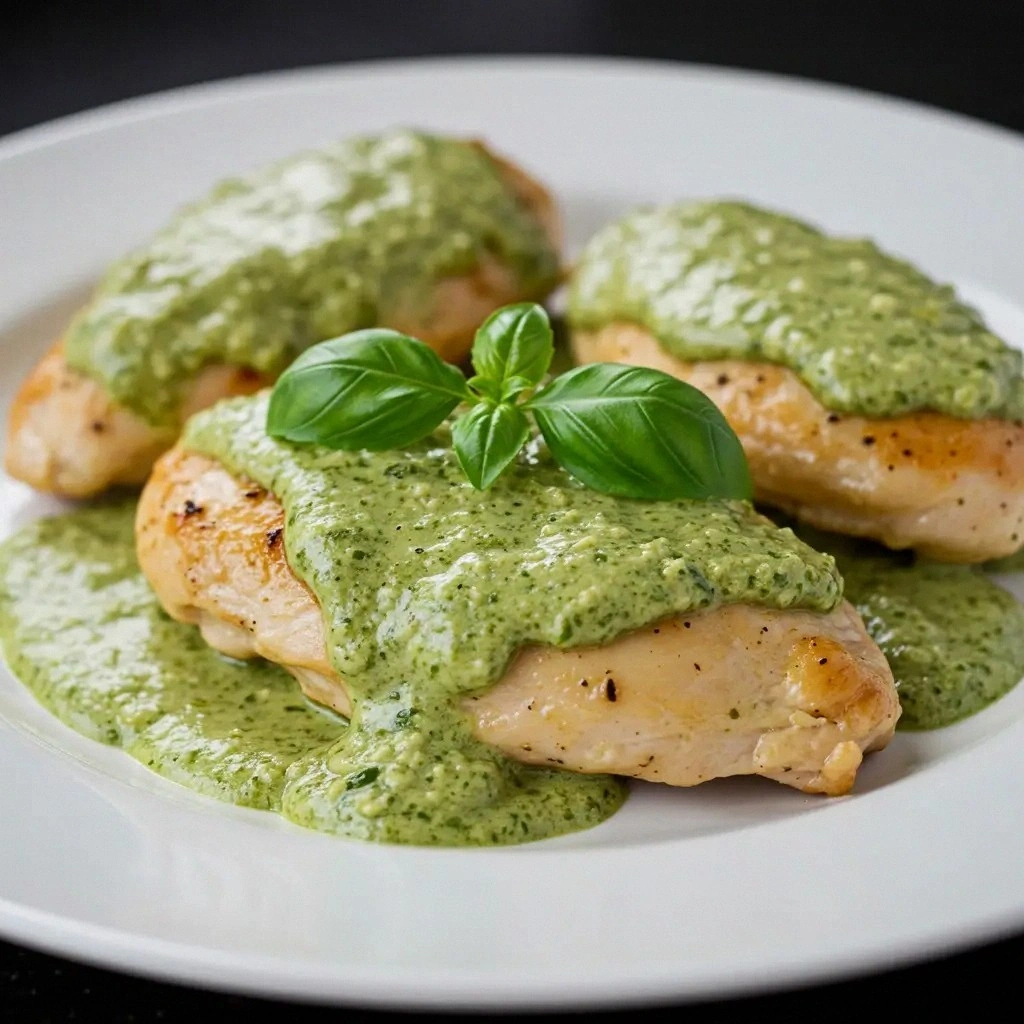
- Return the seared chicken to the skillet, spooning the sauce over each breast. Let the chicken simmer in the sauce for 5 minutes, allowing the flavors to meld and the chicken to finish cooking. The edges of the chicken should start pulling away from the pan, signaling that the sauce has thickened into a rich coating. Keep an eye on the heat—too high can scorch the sauce.
- Meanwhile, cook the pasta in a large pot of salted water until al dente, about 8 minutes. Reserve a cup of pasta water before draining. Toss the drained pasta with the remaining sauce, adding pasta water a tablespoon at a time until the sauce coats the noodles evenly and reaches a silky sheen.
- Plate the pasta on a warmed dish, nestle the creamy pesto chicken on top, and drizzle any remaining sauce over the chicken. Garnish with fresh basil leaves, a sprinkle of grated Parmesan, and a pinch of lemon zest. Serve immediately while the sauce is still warm and glossy, and enjoy the burst of flavors that dance across your palate.
That's it — you did it. But hold on, I've got a few more tricks that'll take this to another level...
Insider Tricks for Flawless Results
The Temperature Rule Nobody Follows
Many cooks over‑cook their chicken by cooking it at too high a temperature, resulting in dry meat. Keep the skillet at medium heat after searing and let the chicken finish cooking in the sauce. This gentle simmer preserves moisture and keeps the chicken tender. I once tried high heat and ended up with a rubbery texture that no sauce could rescue.
Why Your Nose Knows Best
Smell is a powerful indicator of flavor development. As the sauce simmers, you’ll notice a nutty aroma from the Parmesan and a bright herbal scent from the basil. Trust that scent as a cue that the sauce has reached its peak flavor. If the aroma feels flat, give the sauce a few more minutes to meld.
The 5‑Minute Rest That Changes Everything
Letting the chicken rest after searing allows the juices to redistribute, ensuring every bite stays moist. Even a quick 5‑minute rest can make the difference between a dry piece of meat and a succulent one. I always place the chicken on a wire rack to keep the bottom crisp while the rest happens.
Use Pasta Water Wisely
Storing a cup of pasta water is crucial for adjusting sauce thickness. The starchy water helps emulsify the sauce and gives it a glossy finish. Add it gradually, tasting as you go, until you reach the desired consistency. This trick is a game‑changer for any sauce that feels too thick.
Finishing Touches for a Gourmet Finish
A final squeeze of lemon juice brightens the dish and balances the richness of the cream and Parmesan. A dusting of freshly ground black pepper adds a subtle heat that lingers on the palate. These simple touches elevate the dish from comfort food to a restaurant‑style experience.
Creative Twists and Variations
This recipe is a playground. Here are some of my favorite ways to switch things up:
Sunrise Spinach & Pine Nuts
Swap basil for spinach and add toasted pine nuts for a nutty crunch. The spinach’s mild flavor pairs beautifully with the creamy sauce, while the pine nuts add a satisfying texture. This version is ideal for a brunch or a light dinner.
Smoky Chipotle Chicken
Add a teaspoon of chipotle powder to the sauce for a smoky kick that complements the richness of the cream. The chipotle’s heat balances the sweetness of the sun‑dried tomatoes, creating a bold flavor profile. Serve with a side of cilantro‑lime rice for a Mexican twist.
Vegan Creamy Pesto
Use a plant‑based cream and vegan Parmesan to make a cruelty‑free version. Replace the chicken with grilled tofu or tempeh for protein. The sauce’s creamy texture remains, making it a crowd‑pleaser for vegans and non‑vegans alike.
Herb‑Infused Cream
Infuse the heavy cream with fresh rosemary and thyme while it heats, then strain before adding to the sauce. This adds an aromatic depth that elevates the dish to a gourmet level. The herbs also pair well with the basil’s brightness.
Gluten‑Free Pasta
Swap regular pasta for a gluten‑free variety like rice or quinoa pasta. The sauce’s texture remains silky, and the dish stays hearty. This variation is perfect for those with gluten sensitivities.
Cheese‑Loaded Version
Add a handful of shredded mozzarella and a sprinkle of blue cheese to the sauce for a melty, tangy twist. The cheeses melt into the cream, creating a gooey, indulgent coating. This is a great option for cheese lovers who want a richer dish.
Storing and Bringing It Back to Life
Fridge Storage
Store the cooked chicken and sauce separately in airtight containers for up to 3 days. Keep the pasta in a separate container to prevent it from absorbing the sauce. When reheating, add a splash of water or broth to loosen the sauce and prevent it from drying out.
Freezer Friendly
You can freeze the sauce, chicken, and pasta separately for up to 2 months. Thaw overnight in the refrigerator before reheating. Reheat on the stove over low heat, stirring frequently, and add a little water to maintain the sauce’s silky texture.
Best Reheating Method
The ideal way to bring the dish back to life is to reheat it in a skillet over low heat, adding a splash of cream or broth to loosen the sauce. Stir gently until heated through and the sauce is glossy. This method preserves the dish’s original flavor and texture better than microwaving.