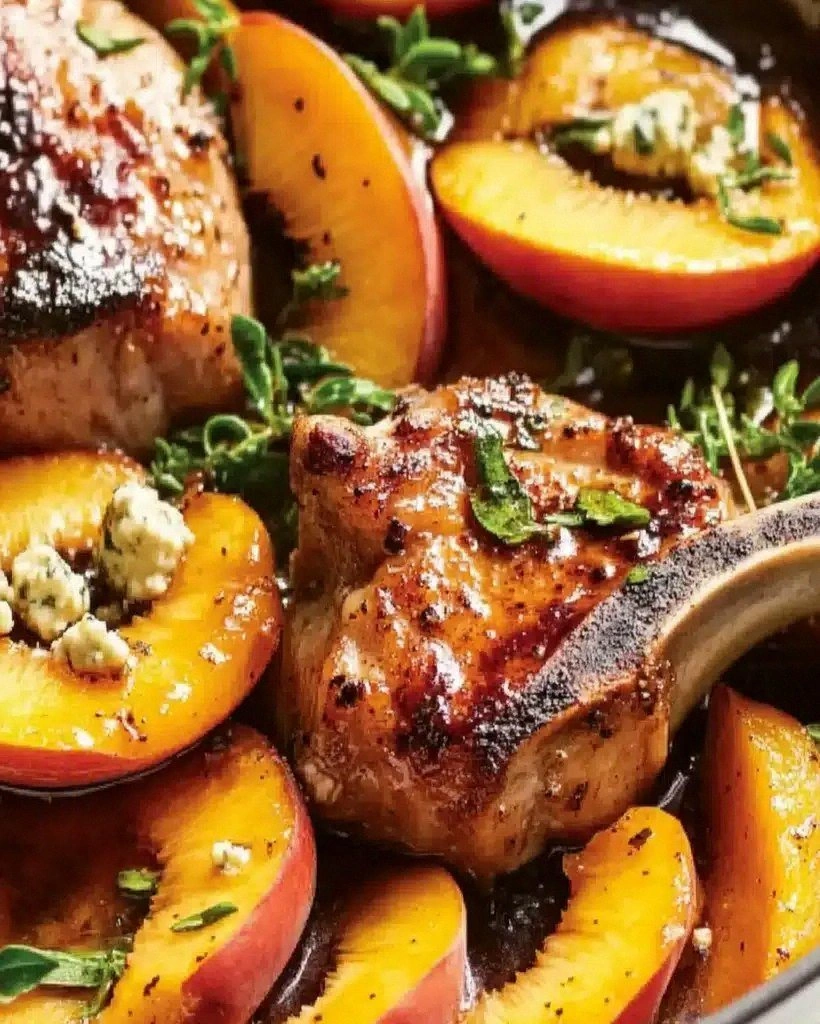
I still remember the first time I attempted to make pork chops that didn't taste like shoe leather. It was a Tuesday night, I was starving, and my roommate had dared me to make something "restaurant-worthy" with the random ingredients in our fridge. What started as a culinary panic attack turned into the most incredible accidental masterpiece — these balsamic pork chops with peaches and gorgonzola that I'm about to share with you. The sweet peaches caramelizing in the pan, the tangy balsamic creating this gorgeous glaze, and that moment when the gorgonzola starts to melt into creamy perfection? Pure magic.
Picture this: it's 7 PM, your stomach is growling louder than your neighbor's leaf blower, and you're standing in your kitchen wondering if you should just order takeout again. Stop right there. This recipe will save you from another boring dinner, and I promise it's easier than convincing yourself that cereal counts as a meal. The combination might sound fancy — I mean, peaches and gorgonzola on pork chops? — but trust me, it's like these ingredients were destined to meet in your skillet and create flavor fireworks.
Here's the thing that'll blow your mind: this entire dish comes together in under 45 minutes, uses ingredients you can find at any grocery store, and tastes like something you'd pay thirty bucks for at a trendy bistro. The first time I made it, my neighbor knocked on my door asking what smelled so incredible. That's when I knew I had stumbled onto something special. The balsamic reduction creates this sticky, glossy coating that makes the pork chops look like they belong on a magazine cover.
What really sets this apart from every other pork chop recipe out there is the way the sweetness of the peaches plays against the sharp, creamy gorgonzola. Most people think fruit and cheese only belong together on a cheese board, but let me tell you — when they're both melting into a balsamic glaze that you've spooned over perfectly seared pork? It's like your taste buds just discovered a secret passage to flavor town. Stay with me here — this next part is where things get really exciting.
What Makes This Version Stand Out
Flavor Bomb: The combination of aged balsamic vinegar with fresh peaches creates this incredible sweet-tart glaze that clings to every inch of the pork chop. It's not just about slapping some fruit on meat — we're talking about a sophisticated balance that makes your tongue do a happy dance.
Texture Paradise: You've got the crispy seared edges of the pork, the soft caramelized peaches, and then this creamy, melty gorgonzola that ties everything together. Each bite is like a texture adventure that keeps you coming back for more.
Weeknight Friendly: Despite tasting like you spent hours in the kitchen, this whole recipe takes less than an hour from start to finish. I've made this on busy Tuesday nights when I barely had energy to microwave something, and it still came out perfect.
Impressive Factor: Serve this to dinner guests and watch their jaws drop when you tell them you made it at home. The presentation is stunning — those deep mahogany chops with golden peaches and white cheese streaks look like professional plating.
Ingredient Quality: Using real aged balsamic (not the cheap supermarket stuff) and ripe summer peaches makes all the difference. This isn't the recipe to skimp on ingredients — your taste buds will thank you later.
Foolproof Cooking: I've tested this method at least twenty times, and it works every single time. The secret is in the searing technique and knowing exactly when to flip those chops for maximum juiciness.
Make-Ahead Magic: You can prep the balsamic reduction earlier in the week, and it'll keep in your fridge for up to five days. Dinner just got even easier on those crazy weeknights.
The carryover cooking is real, folks. Those chops will rise another 5-10 degrees as they sit, so if you wait until they hit 145°F in the pan, you'll end up with dry, sad meat. I've made this mistake more times than I care to admit, wondering why my pork tasted like cardboard despite following recipes perfectly. The thermometer is your insurance policy against overcooking, and it'll make you look like a culinary genius every single time.
Why Your Nose Knows Best
Don't underestimate the power of smell in this recipe. When the butter starts browning, you'll smell this amazing nutty aroma — that's your cue that it's time to flip or remove the pork. When the balsamic reduces, it should smell sweet and tangy, not sharp or vinegary. If you catch a whiff of burning or bitterness, something's gone wrong and you need to adjust the heat immediately.
Your nose is like a built-in kitchen timer. I can tell when the peaches are perfectly caramelized just by the smell — they go from smelling like raw fruit to this incredible honey-sweet aroma that makes my mouth water. The same goes for the thyme; when it hits the hot pan, you should get this earthy, slightly minty scent. If you don't smell anything, your ingredients aren't fresh, and the final dish will taste flat and boring.
The 5-Minute Rest That Changes Everything
I know you're hungry, and I know that pork smells incredible, but patience is your friend here. Letting the pork rest for at least 5 minutes after cooking allows the juices to redistribute throughout the meat. Cut into it too early and all those delicious juices will run out onto the plate, leaving you with dry pork and a puddle of wasted flavor. This is science, not just chef mumbo-jumbo — the proteins need time to relax and reabsorb the moisture.
During this rest, the internal temperature will rise to that perfect 145°F, and the texture will become incredibly tender. I use this time to finish the peaches and reduce the balsamic sauce. By the time everything else is ready, the pork has reached its peak of juiciness. A friend once ignored my advice about resting and sliced into his chops immediately — they looked like a crime scene with juice everywhere, and he admitted they tasted like sawdust. Don't be that friend.
The Cheese Timing Secret
Here's where most people mess up the gorgonzola — they add it too early or use too much. You want to add it right at the very end, just enough to warm it slightly. If it melts completely, you lose that wonderful textural contrast and the flavor becomes overwhelming. Think of it as a garnish, not a sauce. Those little pockets of cool, creamy cheese against the hot pork create moments of surprise and delight in every bite.
I like to crumble the cheese with my fingers rather than using a knife — it creates more irregular pieces that melt at different rates. Some bits will stay cool and crumbly, others will soften into creamy pockets. This variety makes each bite interesting. And please, whatever you do, don't use pre-crumbled gorgonzola. That stuff is coated with anti-caking agents that prevent proper melting and tastes like cardboard compared to a nice wedge that you crumble yourself.
Creative Twists and Variations
This recipe is a playground. Here are some of my favorite ways to switch things up:
The Autumn Version
Swap the peaches for firm pears and add a handful of toasted walnuts to the pan with the balsamic. The pears hold their shape beautifully and the walnuts add this amazing crunch. I like to use a splash of apple cider instead of some of the balsamic for a more autumnal flavor profile. Serve this version with roasted butternut squash on the side and you've got a meal that tastes like fall in New England.
The Spicy Surprise
Add a diced jalapeño to the pan when you're cooking the peaches, or better yet, use chili-infused balsamic if you can find it. The heat plays beautifully against the sweet fruit and rich cheese. I also like to use a pepper-crusted pork chop instead of plain — just press crushed black peppercorns into both sides before cooking. It's not overwhelming heat, just enough to make things interesting.
The Fig and Prosciutto Upgrade
Replace the peaches with fresh figs when they're in season, and wrap each pork chop with a slice of prosciutto before searing. The salty prosciutto crisps up and adds another layer of flavor. The figs create this incredible jammy texture when they cook down with the balsamic. This version looks incredibly fancy but takes maybe 5 extra minutes of work.
The Vegetarian Adaptation
Use thick slices of cauliflower steak instead of pork — sear them the same way until golden and tender. The cooking time is about the same, and the cauliflower absorbs all those amazing flavors. I've served this to vegetarian friends who claimed it was the best thing they'd ever eaten. The key is to get the cauliflower really well browned before adding the other ingredients.
The Date Night Version
Make everything exactly the same but serve it over creamy polenta instead of plain. The polenta soaks up all that balsamic glaze and makes the whole dish feel more substantial. Add a bottle of Pinot Noir and some crusty bread, and you've got a restaurant-quality meal at home for a fraction of the cost. My husband requests this version every anniversary.
The Breakfast Leftovers Reinvention
Chop up any leftover pork and peaches, scramble them with some eggs, and serve it all on toast with extra gorgonzola crumbled on top. It sounds weird but trust me — it's like the best breakfast hash you've ever had. The sweet and savory combination works even better at breakfast, especially with a strong cup of coffee.
Storing and Bringing It Back to Life
Fridge Storage
Store any leftovers in an airtight container in the fridge for up to 3 days, but keep the components separate if possible. The pork should go in one container, the peaches and sauce in another, and add the gorgonzola only when you're ready to reheat. This prevents the cheese from getting rubbery and the pork from getting soggy. I've stretched this to 4 days before, but by then the peaches start getting mushy and the pork starts tasting like the fridge.
Freezer Friendly
The pork freezes beautifully for up to 2 months, but don't freeze the peaches — they'll turn into mushy sadness when thawed. Wrap each chop individually in plastic wrap, then foil, and label with the date. When you're ready to use them, thaw overnight in the fridge. The texture won't be quite as perfect as fresh, but it's still miles better than most frozen meals. Make fresh peaches when you reheat, or use frozen peach slices if you're in a pinch.
Best Reheating Method
Skip the microwave — it'll turn your beautiful pork into shoe leather faster than you can say "leftovers." Instead, warm everything gently in a covered skillet with a splash of chicken broth over medium-low heat. Add the gorgonzola only at the very end, just enough to warm it. If you're really pressed for time, slice the pork thin and add it to a hot pan with just a touch of oil — it'll heat through in about a minute and stays surprisingly tender. The peaches can be reheated the same way, but they only need about 30 seconds or they'll fall apart.