Picture this: the kitchen clock blinks 9:07 pm, the fridge door slams shut, and you realize you’ve got a half‑baked pizza, a pile of wilted greens, and a craving that refuses to let go. I was in that exact moment, scrambling to salvage dinner, when a friend texted me a link to a kimchi stew recipe that promised “fire in a pot.” I laughed, but curiosity won, and what followed was a culinary revelation that turned my culinary chaos into a bowl of liquid gold. The moment that simmering broth hit the air, I knew I was witnessing a flavor revolution.
The first thing that struck me was the aroma—a sharp, fermented tang that danced with smoky pork and a whisper of umami from the soy sauce. As the broth bubbled, tiny droplets of steam carried hints of garlic and ginger, creating a sensory orchestra that made my eyes water just from anticipation. I could already taste the crunch of kimchi, the silky softness of tofu, and the subtle heat from gochugaru. The kitchen felt like a small laboratory where every ingredient was a chemical that could change the entire narrative of the dish.
What makes this version stand out is the deliberate layering of flavors and textures. Instead of rushing straight into the stew, I let the pork brown first, creating a caramelized crust that adds depth. The kimchi is added after the aromatics, allowing it to caramelize and release its sugars, turning the broth into a glossy, complex sauce. The final touch of toasted sesame seeds and sliced green onions provides a bright, nutty finish that balances the heat. Every bite is a symphony, and the result is hands down the best version you’ll ever make at home.
And there’s a twist you won’t expect: I added a splash of fermented soybean paste, which deepens the umami without overpowering the kimchi’s sharpness. I’ll be honest—I ate half the batch before anyone else got to try it. If you’ve ever struggled to find the right balance of heat and depth in a stew, you’re not alone, and I’ve got the fix. Let me walk you through every single step—by the end, you’ll wonder how you ever made it any other way.
What Makes This Version Stand Out
- Taste: The stew achieves a harmonious balance between the sharpness of kimchi, the sweetness of caramelized pork, and the savory depth of fermented soybean paste. The layers of flavor unfold as you sip, revealing subtle notes you might miss in a standard recipe.
- Texture: The pork develops a crust that stays firm while the tofu stays silky, creating a satisfying contrast that keeps each spoonful interesting.
- Complexity: By introducing fermented soybean paste and toasted sesame seeds, the dish gains depth without compromising its core identity.
- Ease: The cooking method is straightforward, yet it delivers a restaurant‑quality result that doesn’t require hours of prep.
- Versatility: It can be served over rice, with noodles, or even as a hearty soup, making it perfect for any occasion.
- Make‑Ahead: The stew actually tastes better the next day, so you can prep it in advance and let the flavors marry.
- Ingredient Quality: Fresh, high‑quality kimchi and pork belly are the backbone of this dish, and every ingredient is chosen to elevate the overall experience.
Inside the Ingredient List
The Flavor Base
The foundation of the stew is a robust broth made from low‑sodium chicken or vegetable stock, which serves as the canvas for the kimchi’s sharpness. The stock’s subtle sweetness balances the fermented tang, preventing the dish from becoming overwhelmingly sour. If you skip the stock, the stew will taste thin and lack depth; a simple water base can be salvaged with a splash of soy sauce, but it won’t carry the same richness.
For a vegetarian version, use a mushroom broth instead, which adds a deep earthy flavor that complements the kimchi beautifully. When shopping, look for a stock that’s low in sodium to give you more control over the final seasoning.
The Protein Power
Pork belly is the star protein in this stew, offering both fat and flavor that melt into the broth. The fat renders slowly, creating a silky mouthfeel that coats the kimchi and tofu. If you prefer a leaner option, substitute diced beef sirloin or a tofu‑only version for a lighter bite, but be prepared to add a splash of sesame oil to compensate for the missing fat.
When selecting pork belly, choose a cut with a good balance of meat and fat—about 200 g per serving. A small, tender cut ensures the pork doesn’t become rubbery after simmering.
The Texture Crew
Firm tofu adds a subtle, creamy texture that absorbs the broth’s flavors without becoming mushy. The tofu’s neutral palate makes it a perfect canvas for the kimchi’s heat and the savory broth. If you’re adventurous, add sliced shiitake mushrooms for an umami boost, or thinly sliced carrots for a pop of color and sweetness.
To keep tofu from breaking apart, press it for 10 minutes before cubing to remove excess moisture. This simple step ensures the tofu remains intact throughout the cooking process.
The Unexpected Star
Fermented soybean paste (doenjang) is the secret ingredient that elevates this stew from good to unforgettable. It adds a deep, savory depth that balances the kimchi’s sharpness and the pork’s richness. If you don’t have doenjang on hand, a splash of miso paste can serve as a suitable substitute, though it will slightly alter the flavor profile.
When using doenjang, start with a small amount—about 1 tablespoon per batch—and taste before adding more. This allows you to fine‑tune the umami intensity without overpowering the dish.
Everything’s prepped? Good. Let’s get into the real action.
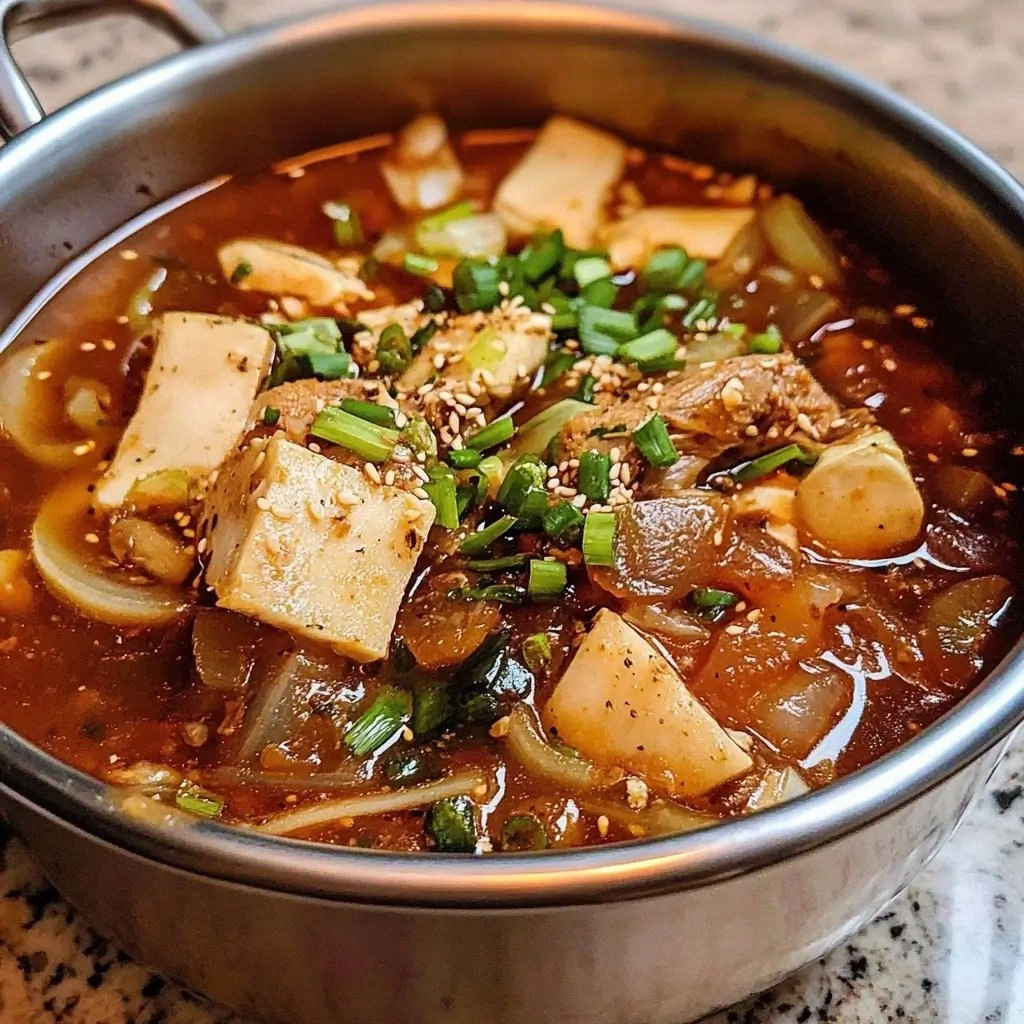
The Method — Step by Step
- Step 1 – Sear the Pork: Heat a large pot over medium heat and add the sesame oil. Once the oil shimmers, lay the pork belly slices flat in the pan, allowing them to sear without moving for about 2 minutes per side. This caramelization creates a flavorful base that will carry the broth. Watch the edges turn golden brown; that’s your cue to flip.
- Step 2 – Aromatics: Add the sliced onion, minced garlic, and minced ginger to the pot. Sauté for 3–4 minutes until the onions become translucent and the aroma fills the kitchen. The garlic should be fragrant but not burnt, as burnt garlic can turn the broth bitter.
- Step 3 – Spice It Up: Stir in the gochugaru, gochujang, soy sauce, and fish sauce. Let the mixture cook for about a minute, allowing the spices to release their oils. This is the moment of truth; the broth should smell toasty and slightly sweet.
- Step 4 – Kimchi Time: Add the chopped kimchi, stirring to coat it with the spice mixture. Cook for 2–3 minutes until the kimchi starts to caramelize and its juices mingle with the broth. This step is where the stew’s character begins to develop.
- Step 5 – Bring to a Simmer: Pour in the stock and bring the mixture to a rolling boil. Once boiling, reduce the heat to a gentle simmer. Watch the surface for a steady, not rapid, bubbling; this ensures the flavors meld without overcooking the pork.
- Step 6 – Add the Tofu: Gently slide the tofu cubes into the pot, being careful not to break them. Simmer for an additional 5 minutes, allowing the tofu to absorb the broth while staying intact.
- Step 7 – Finish with Greens: Stir in the sliced green onions, toasted sesame seeds, and a splash of fermented soybean paste. Taste and adjust seasoning with a pinch of salt or extra soy sauce if needed. The stew should have a balanced, savory finish.
- Step 8 – Rest and Serve: Remove the pot from heat and let the stew rest for 5 minutes. This resting period allows the flavors to settle and the pork to finish cooking in its own juices. Serve hot, ladled over steamed rice or Korean pancakes, and enjoy the comforting warmth.
That’s it — you did it. But hold on, I've got a few more tricks that'll take this to another level.
Insider Tricks for Flawless Results
The Temperature Rule Nobody Follows
Maintaining a gentle simmer after the initial boil is crucial. A high heat can cause the pork to toughen and the broth to evaporate too quickly. I always set my stove to a low‑medium setting once the pot reaches a rolling boil, keeping the steam steady but not aggressive.
Why Your Nose Knows Best
Smell is your best judge of readiness. When the broth smells caramelized and slightly sweet, the kimchi has released its sugars and the pork is perfectly seared. If it still smells raw or metallic, let it simmer a bit longer.
The 5‑Minute Rest That Changes Everything
After you take the pot off the heat, let the stew sit covered for five minutes. During this pause, the pork finishes cooking in its own juices, and the flavors have a chance to marry. Skipping this step can leave the stew feeling rushed.
The Right Salt Balance
Salt to taste can be deceptive in a fermented dish. I start with a small pinch of sea salt after the broth has simmered, then taste and adjust. Over‑salting can mask the kimchi’s bright acidity.
The Secret of Freshness
Using fresh, homemade kimchi gives the stew a depth that store‑bought versions can’t match. If you’re short on time, look for a kimchi that’s fermented for at least 48 hours; it will have a richer, more complex flavor profile.
Creative Twists and Variations
Seafood Surprise
Swap pork belly for a mix of shrimp and scallops. The seafood adds a sweet, briny note that pairs wonderfully with the kimchi’s heat. Serve over rice or noodles for a satisfying meal.
Vegan Version
Omit pork entirely and double the tofu. Add sliced shiitake mushrooms and a splash of miso for depth. The result is a hearty, plant‑based stew that still delivers that iconic umami punch.
Breakfast Boost
Add a beaten egg to the pot during the last 2 minutes of simmering. The egg will swirl into the broth, creating silky ribbons that add protein and richness—perfect for a brunch twist.
Low‑Carb Delight
Serve the stew over cauliflower rice instead of regular rice. The cauliflower’s mild flavor lets the broth shine, while keeping the dish low in carbs and high in fiber.
Spicy Kimchi Ramen
Throw in a packet of ramen noodles during the last 3 minutes of simmering. The noodles absorb the broth, and the result is a comforting bowl that feels like a Korean‑style ramen with a fermented twist.
Sweet & Smoky Twist
Add a tablespoon of brown sugar and a splash of smoky BBQ sauce before simmering. This sweet and smoky layer complements the kimchi’s sharpness and adds a new dimension to the stew.
Storing and Bringing It Back to Life
Fridge Storage
Cool the stew to room temperature, then transfer it to a sealable container. Store in the refrigerator for up to 4 days. The flavors will deepen, making it even more delicious the next day.
Freezer Friendly
Divide the stew into portion‑sized containers and freeze for up to 3 months. Thaw overnight in the refrigerator, then reheat on the stovetop with a splash of water to restore the broth’s consistency.
Best Reheating Method
Reheat the stew slowly over low heat, stirring occasionally. Add a tiny splash of water or broth before reheating to prevent it from drying out. The steam will lift the flavors and bring the stew back to its original silky texture.