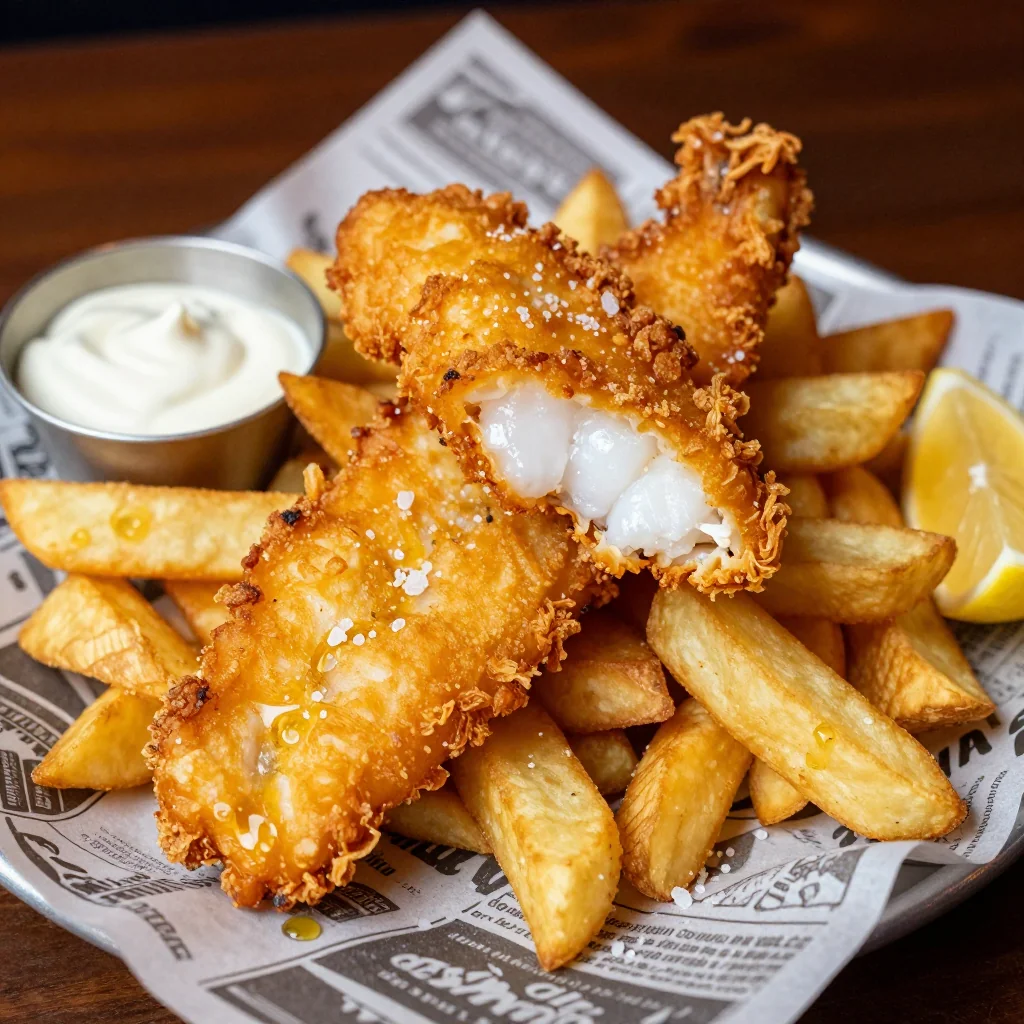
Love this? Pin it for later! 📌
I still remember the first time I stepped into a cozy London pub on a drizzly afternoon, the air thick with the comforting scent of malt vinegar and sizzling oil. My husband and I had spent the morning traipsing through Borough Market, dodging puddles and sampling cheese samples until we were half-frozen and completely ravenous. We ducked into a centuries-old tavern with low beams and even lower lighting, ordered the house fish and chips, and proceeded to have one of those meals that imprints itself on your memory forever. The cod arrived encased in a shell so shatteringly crisp it practically sang when tapped with a fork; the chips were fat, fluffy, and golden. One bite and I knew I had to recreate that magic at home. After two years of weekly experiments—testing batters, frying temperatures, potato varieties, and more beer than I care to admit—I finally nailed the formula. This pub-style crispy fish and chips recipe has since become our Friday-night tradition: the crackle of oil, the tang of homemade tartar sauce, and that first heavenly bite that somehow tastes like rainy London evenings and cozy memories rolled into one.
Why This Recipe Works
- Double dredge + club soda: A whisper-light rice-flour dusting under the airy beer batter guarantees a crust that stays crunchy for 30+ minutes.
- Triple-cook the chips: Simmer, chill, fry, chill, fry again for textbook fluffy interiors and glass-crisp exteriors.
- Low-protein flour blend: Cake flour + cornstarch limit gluten, yielding a delicate, blistered coating.
- Cold oil shock: A 10-second dunk of the battered fish in 200 °C oil sets the crust instantly to prevent sogginess.
- Built-in drainage rack: A wire cooling tray set over the hot pot lets steam escape so bottoms stay crisp.
- Malt-vinegar spray: A quick spritz right after frying seasons every ridge of crust without softening it.
- Make-ahead friendly: Par-cook chips and batter up to 4 hours ahead; finish frying together in under 6 minutes.
- Oven-free option: A heavy Dutch oven on the stovetop holds heat better than most countertop fryers, giving restaurant-quality results without specialty gear.
Ingredients You'll Need
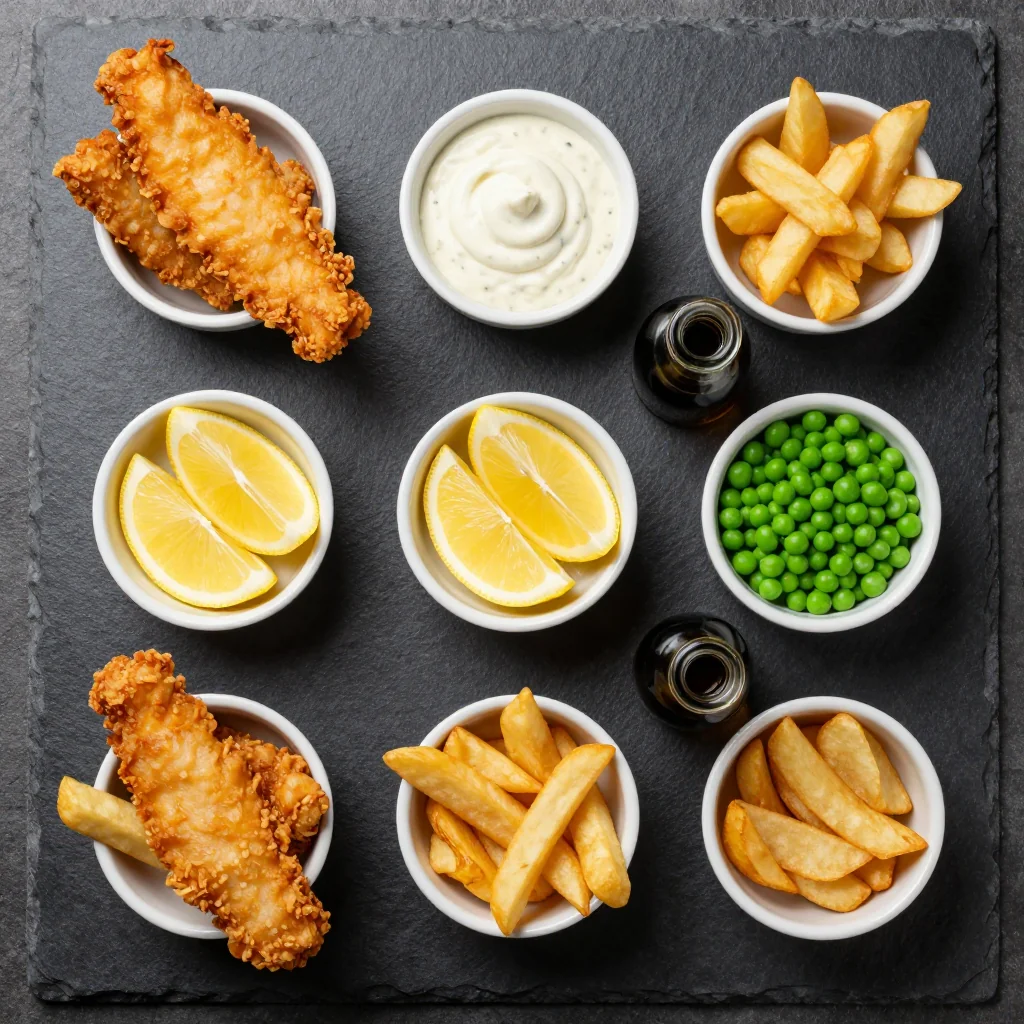
Great fish and chips starts with great shopping. Choose the freshest, thickest white fish you can find—cod or haddock are classic, but hake, pollock, or even halibut cheeks work beautifully. Look for translucent, almost glossy fillets that smell like the ocean, not fishy. Ask your fishmonger to cut 1½-inch-thick center portions; tail pieces taper too thin and overcook. For the potatoes, you want a high-starch, low-moisture variety so they fluff rather than gummy up. In North America, Russet or Idaho are perfect; in the UK, Maris Piper reigns supreme. Avoid waxy reds or fingerlings—they’ll never give you that airy interior. For the batter, a 50-50 mix of cake flour and cornstarch minimizes gluten and maximizes crunch. Club soda adds bubbles, but a cold lager—something crisp like a pilsner—adds both flavor and carbonation; avoid dark ales or IPAs that can turn bitter under high heat. Rice flour for dredging is optional but magical; it creates a micro-layer that separates the wet fish from the wet batter, preventing soggy bottoms. Finally, a neutral high-heat oil such as peanut, sunflower, or refined coconut oil is essential. Olive oil smokes too soon and will leave your dinner tasting acrid.
How to Make Crispy Fish and Chips for a Pub-Style Dinner
Prep the potatoes triple-cook style
Peel and cut 2½ lb (1.1 kg) Russet potatoes into ¾-inch-thick batons. Rinse under cold water until the water runs clear; this removes excess starch that can darken chips. Place in a pot, cover with salted water, bring to a gentle simmer, and cook 7 minutes—you want the edges just starting to fray. Drain carefully; let steam-dry 5 minutes, then spread on a parchment-lined sheet. Refrigerate uncovered at least 30 minutes (or up to 24 h) to dehydrate the surface. This chilling step is what ultimately builds the glass-like crust.
Heat the oil & set up a safe station
Pour 3 qt (2.8 L) neutral oil into a 5- to 6-qt heavy Dutch oven. Clip on a candy thermometer and heat to 300 °F (150 °C). Position the pot on the back burner if you have kids (or curious cats), and place a large rimmed baking sheet lined with a wire cooling rack nearby. The rack lets hot air circulate under the fried food so bottoms stay crunchy. Keep a fire extinguisher within reach—safety first.
First fry the chips
Pat potatoes absolutely dry. Working in 3 batches (crowding drops oil temp), fry 4 minutes; they should look pale and feel leathery. Lift with a spider onto the rack. Once all chips are done, increase oil to 375 °F (190 °C). Meanwhile, the chips cool; this temperature swing is crucial for the final crisp.
Mix the beer batter & keep it frosty
In a wide, shallow bowl whisk 1 cup (120 g) cake flour, ¾ cup (90 g) cornstarch, 1 tsp kosher salt, ½ tsp baking powder, and ¼ tsp paprika. Make a well; pour in ¾ cup (175 ml) cold lager and ¼ cup (60 ml) club soda. Stir with chopsticks just until combined—lumps are your friend. Nestle the bowl into a larger bowl filled with ice to keep the batter below 40 °F (4 °C) while you work. Cold batter hitting hot oil = explosive puff and minimal grease absorption.
Dredge the fish
Pat 2 lb (900 g) skinless cod portions very dry. Season both sides with ½ tsp kosher salt and ¼ tsp white pepper. Arrange ½ cup (60 g) rice flour on a plate. Lightly coat each fillet; tap off excess. This invisible jacket prevents batter slippage and forms a blistered surface.
The 10-second crust set
Hold one floured fillet by the tail end. Dip into the icy batter, letting excess drip 2 seconds. Carefully slide it away from you into the 375 °F oil, keeping hold for 2 seconds so the initial sear sets, then release. Fry 8–10 minutes total, turning once at 5 minutes, until deep mahogany. Maintain oil between 350–365 °F; adjust burner as needed. Lift onto the rack, immediately mist with malt vinegar, and sprinkle with flaky sea salt.
Finish the chips hot & fast
Once fish is done, re-fry the par-cooked chips in two batches, 2–3 minutes each, until puffed and golden. Toss in a bowl with a pinch of salt while still glistening.
Serve pub-style
Pile chips on a sheet of butcher paper or a warm platter. Nestle the fish alongside, add a ramekin of mushy peas if you’re feeling authentic, and serve with lemon wedges, tartar sauce, and extra malt vinegar for tableside splashing. Eat immediately—this is not a meal that waits.
Expert Tips
Oil temperature is everything
If you don’t own a thermometer, drop a 1-inch cube of white bread into the oil: it should brown in 25 seconds at 350 °F. Too fast and the outside burns before the inside cooks; too slow and you’ll have greasy results.
Keep it cold, keep it airy
Pop your mixing bowl and even the measuring cup of beer into the freezer 15 minutes before you start. Colder batter = more dramatic steam puff = lacier crust.
Dry, dry, dry
Moisture is the enemy of crisp. After rinsing potatoes, spin them in a salad spinner, then roll in a clean tea towel. Same for fish: use paper towels until no more water wicks away.
Don’t over-mix batter
Stir until flour streaks just disappear. Over-mixing develops gluten and leads to chewy, bready coating reminiscent of carnival funnel cake rather than delicate pub batter.
Batch discipline
Fry max 2 pieces of fish at once. Adding too much food drops oil temperature, causing the coating to separate and the chips to soak up fat like hungry sponges.
Reuse oil smartly
Cool, strain through coffee filter, bottle, and refrigerate. You can fry two more rounds of seafood before the oil darkens; afterward use for savory stir-fries or discard responsibly.
Variations to Try
- Gluten-Free: swap rice flour + cornstarch 1:1 for the cake flour. Add ¼ tsp xanthan gum for structure.
- Beer-Free: replace beer with ice-cold sparkling water plus 1 tsp cider vinegar for tang.
- Spicy Cornmeal Crust: sub ⅓ of the flour with fine cornmeal and add ½ tsp smoked paprika + pinch cayenne.
- Sweet-Potato Chips: lower first-fry temp to 275 °F; sweet potatoes caramelize faster and need gentler handling.
- Chunky Tartar Twists: fold diced cornichons, capers, dill, and a whisper of horseradish into homemade mayo for a punchy dip.
- Loaded Chips: after final fry, scatter grated Cheddar and crisp bacon lardons over chips, flash under broiler 90 seconds, then top with scallions and sour cream.
Storage Tips
Truth talk: fried food is at its peak the second it leaves the oil. That said, life happens. Cool leftover fish and chips completely, then refrigerate in a paper towel-lined airtight container; the towel wicks condensation. Reheat on a wire rack set over a sheet pan in a 400 °F (200 °C) oven 8–10 minutes (6 for chips). Microwaves turn crusts to rubber, so resist the urge. Frozen fried fish holds up surprisingly well: flash-freeze pieces on a tray, then bag; bake from frozen 20 minutes at 425 °F, flipping halfway. Consume within 2 months for best quality. Batter does not keep—mix à la minute every time.
Frequently Asked Questions
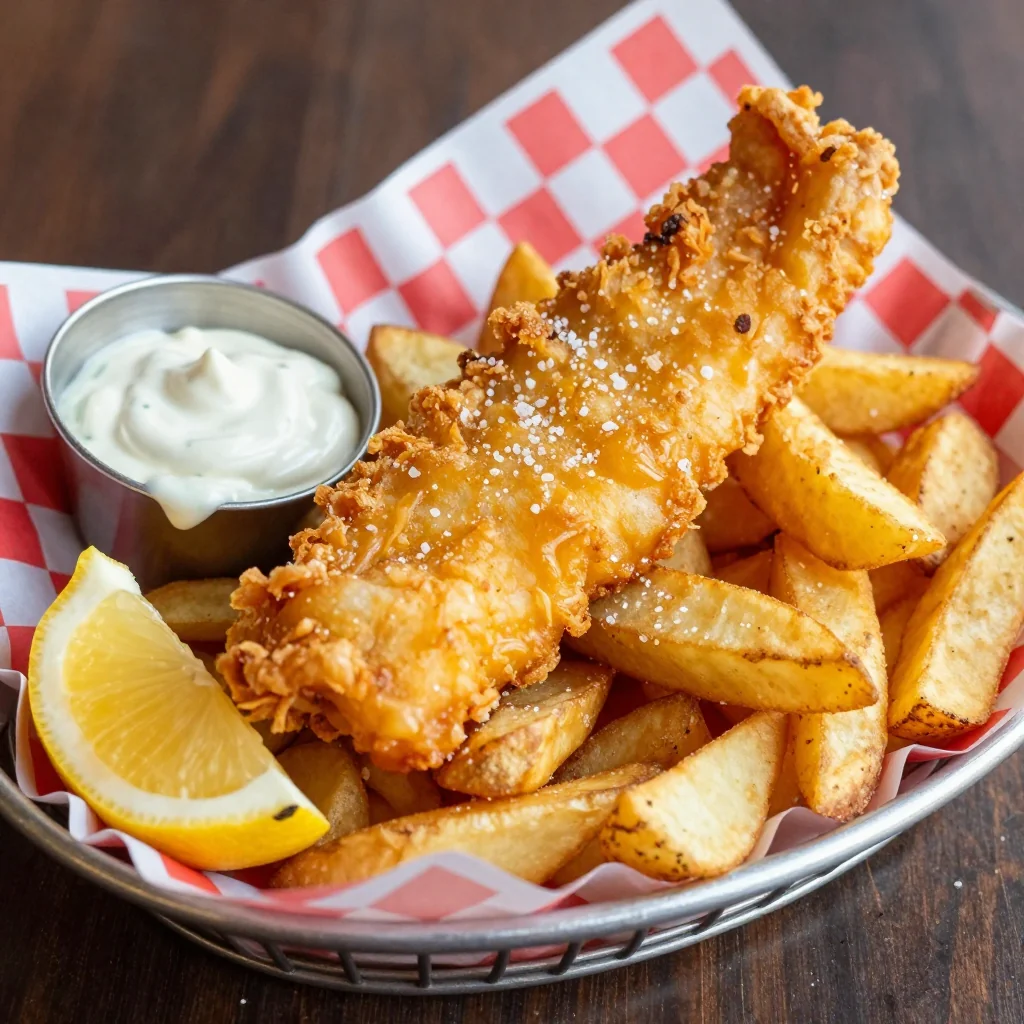
Crispy Fish and Chips for a Pub-Style Dinner
Ingredients
Instructions
- Prep potatoes: Cut into ¾-inch batons, rinse until water is clear. Simmer in salted water 7 min, drain, steam-dry 5 min, chill uncovered 30 min.
- Heat oil: In a Dutch oven bring oil to 300 °F (150 °C). Fry potatoes in 3 batches, 4 min each; they should look pale. Transfer to rack; increase oil to 375 °F (190 °C).
- Make batter: Whisk cake flour, cornstarch, 1 tsp salt, baking powder, paprika. Stir in cold lager and club soda until just combined; keep bowl over ice.
- Season & dredge fish: Pat fillets dry, salt & pepper, coat lightly in rice flour.
- Fry fish: Dip into batter, let excess drip off, slide into 375 °F oil away from you. Fry 2 pieces at a time, 8–10 min, turning once, until deep golden. Drain on rack, mist with malt vinegar.
- Finish chips: Re-fry in 2 batches, 2–3 min until golden. Toss with salt.
- Serve: Pile chips and fish on a platter with lemon wedges and extra vinegar.
Recipe Notes
Oil temperature is critical—use a thermometer and never crowd the pot. Leftovers reheat best on a wire rack in a 400 °F oven for 8–10 minutes.